
Chairman, Institute for Med. Immunology & Berlin-Brandenburg Center for Regenerative Therapies (BCRT) & Dept. Immunology, Labor Berlin Vivantes, Charité GmbH Charité-Universitätsmedizin, Berl
BIOGRAPHY

AUG 30, 2016 8:00 AM PDT
Immunomodulation and immunogenicity of human MSC-like cells : What did we learn from in vitro and in vivo studies ?
Presented at:
4th Annual 24 Hours of Stem Cells™ virtual event
Speaker
Abstract
Mesenchymal stromal cell (MSC) therapy is a promising option to support endogenous regeneration and immunomodulation. However, the clinical results are contradictory. We think that the recent studies have to major limitations: poor characterization of MSC(like) cell products which were used and the lack of adequate immune monitoring to better understand therapy response, mode-of-action, dose-dependency etc.
Because of their high regenerative and immunomodulatory potency shown in various preclinical models and their well-defined manufactoring process in 3-D bioreactors, we focused on the characterization of placental-expanded mesenchymal like adherent cells (PLX) that are aimed to be applied as allogeneic off-the-shelf product.
Interestingly, by minor manipulation in the manufactoring process, Pluristem generated two related products PLX-PAD and PLX-RAD. Both PLX-cell types were comparable regarding their in vitro differentiation capacity and marker profile (CD73+90+105+45-31-34-) that is typical for MSC-like cells. However, the cells showed different properties in some but not all preclinical models. We hypothesized that the protective effects are mediated by the PLX-cells´ secretome which might be different between PLX-RAD and PLX-PAD cells. In fact, conditioned medium of PLX-RAD expressed a distinct secretome and showed distinct effects in vitro and in vivo. Whole genome DNA methylation analysis and CD screen revealed significant differences between the two products.
PLX-PAD cells are supportive in different tissue regeneration models. In fact, clinical phase I/IIa studies in severe chronic limb ischemia (CLI) and muscle injury demonstrated safety but also clear hints for efficacy. Immune monitoring gave insights into immunogenicity, immune modulation, and dose-related effects which help to design ongoing studies.
In summary, extensive biomarker studies provided mechanistic insights into PLX products and highlighted the need for careful characterization of MSC-like cell products to better understand dosing, indication, mode-of-action etc.
Because of their high regenerative and immunomodulatory potency shown in various preclinical models and their well-defined manufactoring process in 3-D bioreactors, we focused on the characterization of placental-expanded mesenchymal like adherent cells (PLX) that are aimed to be applied as allogeneic off-the-shelf product.
Interestingly, by minor manipulation in the manufactoring process, Pluristem generated two related products PLX-PAD and PLX-RAD. Both PLX-cell types were comparable regarding their in vitro differentiation capacity and marker profile (CD73+90+105+45-31-34-) that is typical for MSC-like cells. However, the cells showed different properties in some but not all preclinical models. We hypothesized that the protective effects are mediated by the PLX-cells´ secretome which might be different between PLX-RAD and PLX-PAD cells. In fact, conditioned medium of PLX-RAD expressed a distinct secretome and showed distinct effects in vitro and in vivo. Whole genome DNA methylation analysis and CD screen revealed significant differences between the two products.
PLX-PAD cells are supportive in different tissue regeneration models. In fact, clinical phase I/IIa studies in severe chronic limb ischemia (CLI) and muscle injury demonstrated safety but also clear hints for efficacy. Immune monitoring gave insights into immunogenicity, immune modulation, and dose-related effects which help to design ongoing studies.
In summary, extensive biomarker studies provided mechanistic insights into PLX products and highlighted the need for careful characterization of MSC-like cell products to better understand dosing, indication, mode-of-action etc.
You May Also Like
JAN 20, 2026 | 11:00 AM
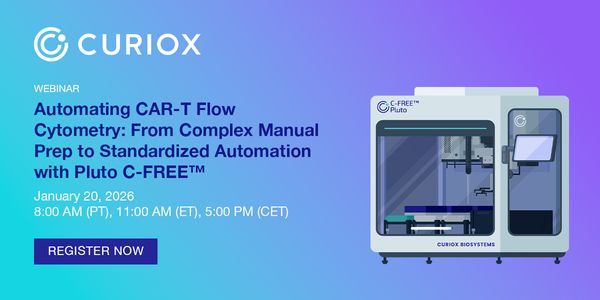
CAR-T translational research demands precise, reproducible, and scalable flow cytometry workflows. Manual centrifugation and antibody preparation steps remain major sources of variability an...
JAN 20, 2026 | 9:15 AM
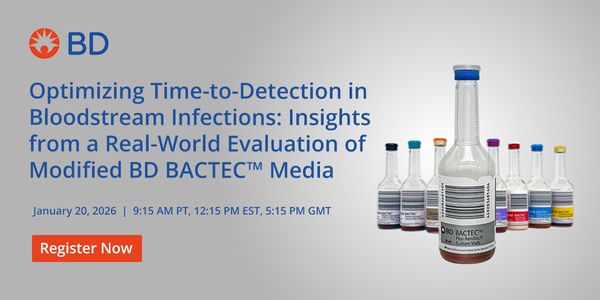
Bloodstream infections (BSIs) remain a critical challenge in clinical care, where every hour of delay in diagnosis can significantly impact patient outcomes. This webinar explores findings f...
JAN 21, 2026 | 8:45 AM
C.E. CREDITS

Lipid nanoparticles (LNPs) have become the gold standard in non-viral gene delivery technologies, exemplified by the approval of the LNP messenger RNA (mRNA) vaccines against SARS-CoV-2. Sin...
JAN 22, 2026 | 8:00 AM
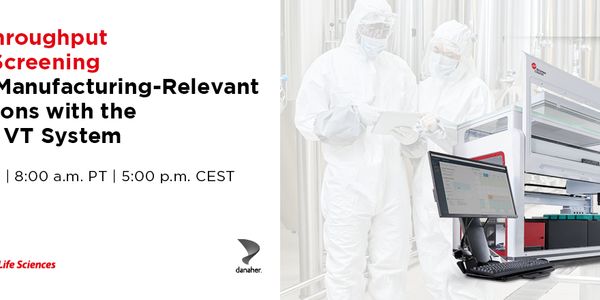
Cell line development (CLD) is often a critical bottleneck in biopharmaceutical production, often requiring labor-intensive workflows and multiple sequential screening steps that extend time...
JAN 29, 2026 | 8:00 AM

Modern laboratories are under constant pressure to deliver results faster, more accurately, and with unwavering compliance. Organizations that harness next-generation LIMS capabilities gain...
FEB 17, 2026 | 3:00 PM
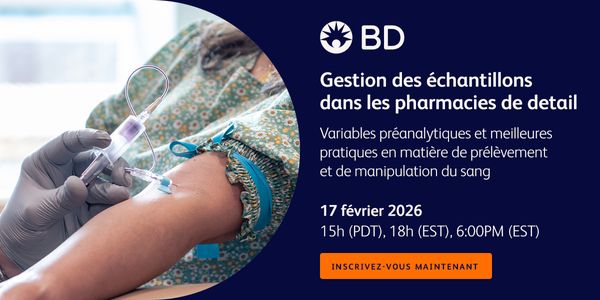
Alors que les soins de santé continuent d'évoluer vers des modèles accessibles et centrés sur le patient, les pharmacies de détail apparaissent comme d...
Loading Comments...